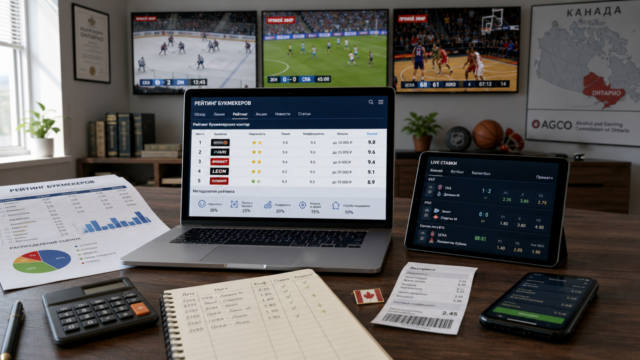
A Canadian label on a sports article can describe its audience, the location of an event, the origin of its data or the subject of a commercial comparison. These meanings are not interchangeable. Before relying on a national headline, it is worth finding out which geography the underlying information actually covers. That small distinction can prevent a local observation from being mistaken for a countrywide conclusion.
Identify What the Place Name Describes
A report might concern a team based in one city, a match played in another place and readers spread across several regions. Its title may mention Canada even though its examples come from a much narrower setting. The article should make that scope clear rather than leaving the reader to infer it from a flag, a currency symbol or a familiar name.
Geographic labels also need to be exact. A province, a territory, a city and a competition are different categories. Treating them as loose synonyms makes a comparison harder to interpret. The point is not to turn a sports article into a geography quiz; it is to know which group or location a statement is supposed to describe.
Keep Event Location Separate From Audience Location
A Canadian audience can follow an event held elsewhere. Conversely, an event taking place in Canada may appear in coverage aimed at readers abroad. Neither circumstance is a problem on its own. The difficulty arises when a writer silently transfers local conditions, service claims or schedules from one setting to another.
Look for explicit wording such as the venue, competition and relevant time zone. A date without a location or a time reference can be ambiguous when copied between publications. A good preview resolves that ambiguity in ordinary language instead of assuming that every reader shares the writer’s location.
Match a Comparison to Its Actual Evidence
A comparison of sports websites may draw on information from one region while using a broad national title. That title needs qualification unless the wider claim has been supported. A report about one interface or one published set of information does not establish that every regional version is the same.
| Geographic reference | Question to ask | Common overreach |
|---|---|---|
| Event venue | Where will the event actually take place? | Using the team’s home city as the venue |
| Reader location | Which audience is the article addressing? | Assuming all readers share one time zone |
| Source coverage | Which regions and competitions are in the data? | Turning a limited sample into a national result |
| Company claim | Which exact service and region does it concern? | Treating a general brand statement as universal |
Do Not Infer Rules From Branding
A Canadian-looking page does not establish which rules apply to a service. The language of a website, its domain ending and the currency in an illustration answer different questions from authorization or eligibility. A sports comparison should not substitute those visual signals for evidence.
Where a page makes a legal or regulatory claim, its author needs an identifiable, relevant and current basis for it. This article does not provide an operator list or a summary of provincial rules. Its purpose is to help readers notice when a geographic assertion has been made without the information necessary to support it.
Watch What Happens When Material Is Reused
Reused text can retain references that no longer fit its new setting. A paragraph may mention a local time, a regional competition or a service described for another audience. A translated headline alone does not resolve those mismatches. Check whether the body consistently addresses the same place and subject as the introduction.
An international comparison can be useful when the differences are intentional and explained. It becomes confusing when unrelated examples are merely placed beside one another. Clear section labels and source dates help distinguish a real comparison from text assembled around similar keywords.
Record the Boundary of a Claim
A simple reading note can capture the claim, the place it concerns and the source that supports it. If one of those pieces is missing, mark the gap. This is more reliable than filling it with assumptions based on a team’s name or the appearance of the page.
Prefer a Precise Local Statement to an Unsupported National One
Sports coverage does not need to speak for an entire country to be useful. A well-described local observation gives readers something they can understand and check. A broad claim without a clear geographic boundary does the opposite. Precision about place strengthens the article while leaving room for an honest statement of what it does not cover.